Smart Warehouse Cooling Solutions: How Evaporative Cooling Reduces Operational Costs in Large Facilities
Introduction to Warehouse Cooling Challenges in Large Facilities
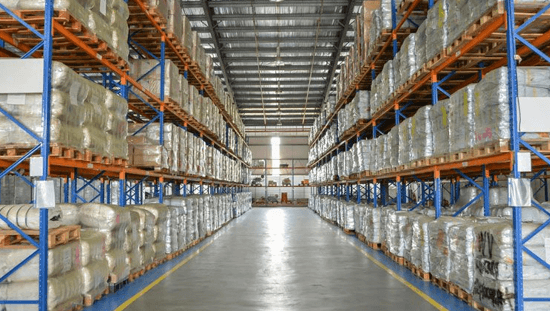
Modern industrial warehouses require precise temperature control to maintain operational efficiency and protect stored materials. Large facilities generate significant heat due to continuous operations, machinery usage, and restricted airflow. This makes cooling a critical requirement rather than an optional system. Effective warehouse cooling solutions are designed to manage these challenges by maintaining stable indoor conditions while reducing energy consumption.
Traditional cooling methods often struggle to handle large-volume spaces efficiently. They consume high amounts of electricity and require complex infrastructure. This has led to increased demand for scalable and energy-efficient alternatives. Modern warehouse cooling systems focus on airflow optimization and natural cooling processes to achieve better performance with lower operational costs.
Understanding Modern Warehouse Cooling Systems
Warehouse cooling solutions are designed to regulate temperature across large enclosed spaces while ensuring consistent airflow distribution. These systems focus on balancing energy efficiency with operational stability. Instead of relying entirely on mechanical refrigeration, they often use hybrid cooling techniques that combine natural and engineered airflow systems.
The primary goal of these systems is to reduce heat buildup and maintain a controlled environment. This is essential for protecting goods, improving working conditions, and ensuring operational continuity. Efficient cooling systems also help reduce strain on electrical infrastructure.
Key characteristics of modern warehouse cooling systems include:
- Large-scale airflow management for uniform cooling
- Energy-efficient temperature regulation methods
- Reduced dependence on compressor-based systems
- Integration with ventilation and air distribution units
- Continuous operation capability for industrial environments
These characteristics make modern cooling systems more suitable for large industrial facilities.
Role of Evaporative Cooling in Warehouse Environments
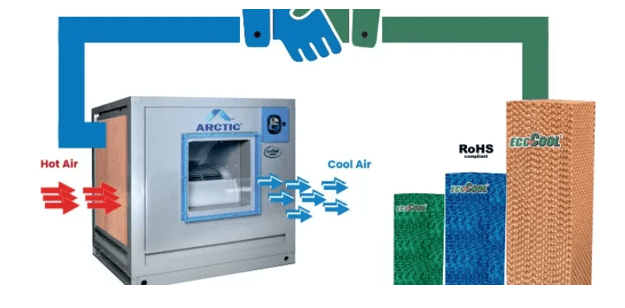
Evaporative cooling is one of the most effective methods used in warehouse cooling systems. It works by passing warm air through a moistened medium, where heat is absorbed and air temperature is reduced. This process is energy-efficient and suitable for large spaces where traditional HVAC systems may not perform effectively.
The system is highly dependent on airflow and humidity levels, making it a practical solution for industrial environments. It also reduces the need for heavy mechanical cooling, which significantly lowers energy consumption. This approach is widely used in large-scale facilities where cost efficiency is a priority.
Benefits of evaporative cooling in warehouses include:
- Reduced energy consumption compared to traditional HVAC systems
- Effective cooling for large open spaces
- Lower operational and maintenance costs
- Improved airflow distribution across wide areas
- Reduced environmental impact
These benefits make evaporative cooling a preferred choice for industrial cooling applications.
Integration with Advanced Industrial Air Systems
Modern warehouse cooling systems often work in combination with advanced air treatment technologies to improve overall efficiency. These systems are designed to handle multiple air quality challenges, including temperature control, air purification, and pollutant management.
In some industrial setups, air systems are integrated with technologies such as voc concentrators to manage air quality while maintaining cooling efficiency. This integration helps ensure a controlled and safe working environment. It also improves system performance by reducing air contamination and maintaining stable airflow conditions.
Key benefits of integrated air systems:
- Improved indoor air quality management
- Reduced airborne contaminants in industrial spaces
- Enhanced cooling system efficiency
- Better airflow balance across large facilities
- Lower energy consumption through optimized operation
This combination of cooling and air treatment technologies supports long-term operational efficiency.
See also: Benefits of Educational Technology
Key Components of Warehouse Cooling Systems
Warehouse cooling systems consist of multiple components that work together to maintain stable environmental conditions. Each component plays a specific role in controlling airflow, temperature, and humidity. Proper system design ensures smooth operation and energy efficiency.
These systems are built to handle continuous operation in demanding industrial environments. They are also designed for scalability, allowing them to adapt to different warehouse sizes and configurations.
Core components include:
- Air circulation and ventilation systems
- Evaporative cooling units for temperature reduction
- Air filtration and distribution modules
- Temperature and humidity control sensors
- Structural airflow channels for uniform cooling
Additional system functions include:
- Continuous air movement for temperature balance
- Controlled humidity regulation
- Energy-efficient cooling distribution
- Reduced hot spot formation in large areas
- Stable operational performance under load
These components ensure effective and consistent cooling performance across large facilities.
Safety and Performance Enhancement in Cooling Systems
Safety is a critical factor in warehouse cooling system design. Industrial environments require systems that are not only efficient but also safe under continuous operation. This includes the use of fire-resistant materials and safety-focused components that reduce operational risks.
For example, materials such as fire resistant pad are used in certain cooling and air handling systems to improve safety standards. These materials help reduce fire-related risks while maintaining system performance. Safety integration is essential in modern industrial cooling design.
Key safety and performance benefits include:
- Improved fire resistance in air handling components
- Enhanced operational safety in industrial environments
- Reduced risk of system failure under heat stress
- Stable performance during continuous operation
- Better compliance with industrial safety standards
These features ensure that cooling systems operate safely and efficiently in demanding environments.
Warehouse Cooling vs Traditional HVAC Systems
Warehouse cooling systems differ significantly from traditional HVAC systems in terms of efficiency, scalability, and cost. Traditional HVAC systems are often designed for smaller, enclosed spaces and may struggle with large industrial environments. In contrast, modern warehouse cooling systems are designed specifically for large-scale applications.
Key differences include:
- Warehouse cooling systems are more scalable for large spaces
- Lower energy consumption compared to traditional HVAC systems
- Better airflow distribution in open environments
- Reduced operational complexity
- Lower long-term maintenance requirements
Performance comparison highlights:
- Improved cooling efficiency in large areas
- Better cost control over time
- More stable temperature regulation
- Reduced environmental impact
- Higher adaptability to industrial requirements
These differences make warehouse cooling systems more suitable for modern industrial applications.
System Design and Implementation Considerations
Proper system design is essential for achieving maximum efficiency in warehouse cooling systems. Factors such as warehouse size, airflow requirements, and environmental conditions must be carefully analyzed. Incorrect system design can lead to inefficiency and uneven cooling distribution.
Integration with existing infrastructure is also an important consideration. Systems must be compatible with ventilation and air distribution setups to ensure smooth operation. Proper planning improves long-term performance and reduces operational costs.
Key design considerations include:
- Warehouse size and layout
- Airflow distribution requirements
- Environmental temperature conditions
- System scalability and expansion capability
- Maintenance accessibility and planning
These factors ensure efficient system performance and long-term reliability.
Professional Support and System Optimization
Warehouse cooling systems require expert design and integration to achieve optimal performance. Professional consultation ensures that systems are properly configured based on operational requirements. This helps improve efficiency and reduce long-term costs.
For expert assistance and system guidance, you can contact Desiccant Rotors International for professional support. Expert input ensures that cooling systems are designed for maximum efficiency, safety, and reliability.
Conclusion
Smart warehouse cooling solutions play a vital role in maintaining operational efficiency in large industrial facilities. They provide effective temperature control while significantly reducing energy consumption. By using advanced evaporative cooling technology and integrated air systems, these solutions ensure stable and cost-efficient operation.
Their scalability, energy efficiency, and adaptability make them an essential part of modern industrial infrastructure. These systems support long-term sustainability while maintaining optimal working conditions in large warehouses.
Frequently Asked Questions (FAQs)
1. What are warehouse cooling solutions?
Warehouse cooling solutions are industrial systems designed to regulate temperature and airflow in large storage and operational facilities.
2. How does evaporative cooling help in warehouses?
It reduces air temperature using natural evaporation, making it energy-efficient and suitable for large spaces.
3. Are warehouse cooling systems energy efficient?
Yes, they consume less energy compared to traditional HVAC systems, especially in large open environments.
4. What components are used in warehouse cooling systems?
They include ventilation units, evaporative cooling systems, airflow channels, and control sensors.
5. Why is system design important in warehouse cooling?
Proper design ensures efficient airflow distribution, energy savings, and consistent temperature control.