What Stone Shop Salespeople Need to Know About Slab Material
For this top piece, the useful answer lives in the shop floor details: slab photos, measurements, install constraints, and whether the team can trust the number before anyone starts fabricating stone.
Last fall I was standing in a 4,000-square-foot showroom outside Charlotte watching a salesperson named Derek lose a $14,000 kitchen job in real time. The homeowner, a retired school principal, had come in wanting Calacatta marble for her island. She cooked every day. She had grandchildren. Derek said “marble is beautiful” and started pulling samples. Nobody mentioned that Calacatta sits at a 3 on the Mohs hardness scale, etches from lemon juice, and would look like a topographic map within six months of heavy use. The principal signed, the shop installed, and eleven weeks later she was on the phone asking why her countertops were ruined.
That callback could have been a different conversation entirely. It wasn’t a dishonest sale. Derek genuinely liked marble. He just didn’t have the structured material knowledge to steer a customer away from a decision that was going to make everybody miserable.
This is the gap that kills stone shops: not bad fabrication, not bad pricing, but salespeople who lack a systematic understanding of slab material and how it performs once it’s living in someone’s kitchen.
The Real Cost of Winging It
Every stone shop has its version of the Derek story. The numbers back it up. Shops that build a documented internal material reference (one single document covering categories, properties, tolerances, and price tiers) report up to a 40 percent reduction in material-related callbacks, based on case studies from mid-sized residential fabricators. That’s not a rounding error. For a shop doing 30 kitchens a month, cutting callbacks by 40 percent can save thousands in labor, replacement material, and the slow reputation bleed that comes from unhappy customers telling their neighbors.
There’s also the front-end benefit. Shops with documented material training report up to 14 percent improvement in showroom-to-quote conversion. Which makes sense. A salesperson who can explain why quartzite at $80 to $180 per square foot installed is worth the premium over granite at $38 to $115 is doing consultative selling. A salesperson who can only point at pretty slabs is doing retail.
For homeowners reading this: two shops quoting you the same slab at the same price can deliver wildly different finished kitchens. The difference isn’t the stone. It’s whether the shop’s people actually understand the stone.
See also: Benefits of Digital Health Technology
What a Salesperson Actually Needs to Know
I’m going to lay out the six categories of slab knowledge that belong in every shop’s internal reference. This isn’t academic. It’s the stuff that prevents callbacks.
Stone categories and their behavior. Granite, marble, quartzite, soapstone, travertine, engineered quartz, porcelain. Each one machines differently, wears differently, and suits different kitchens. Quartzite (7 to 7.5 Mohs) is harder than granite (6 to 6.5) and dramatically harder than marble (3 to 5). That number should be in the salesperson’s head the way a mechanic knows torque specs.
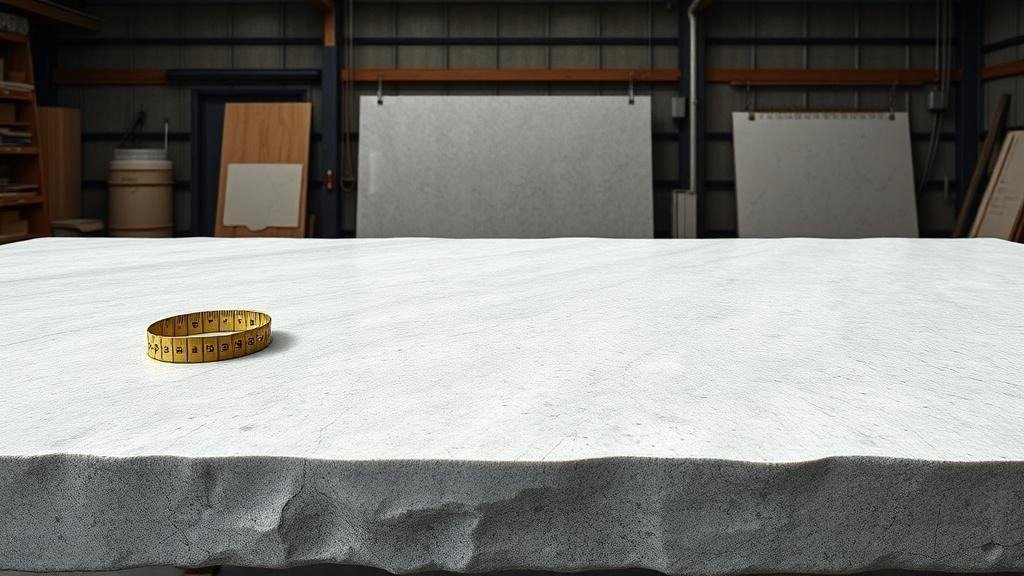
Dimensional standards. Quartz slabs in 2026 run roughly 56 by 120 inches in 2cm or 3cm thickness across major brands. This matters for layout, seam placement, and waste. A salesperson who understands yield from a standard slab can quote more accurately and set expectations about where seams will fall.
Porosity and sealing. Granite porosity varies from 0.4 to 1.5 percent by volume across common imports. That range is enormous. A low-porosity granite from Brazil might need sealing every three years. A high-porosity Indian granite might need it annually. Engineered quartz needs no sealing at all, which is one reason it remains the residential volume leader.
Heat and impact tolerance. Engineered quartz handles everyday cooking but resin damage begins above roughly 300 degrees Fahrenheit. A hot skillet straight from the burner? That can leave a mark. Porcelain handles heat better but is thinner and more demanding to fabricate. Marble at 3cm for residential kitchens isn’t a style choice; it’s a structural one to avoid flex cracking.
Color and pattern consistency. Engineered stone has batch-to-batch variation that surprises homeowners who assume factory-made means identical. Natural stone is, of course, unique per slab. Vein matching across an L-shaped kitchen takes planning and sometimes a trip to the yard with the customer.
Price tiers. In 2026, installed pricing runs roughly: granite $38 to $115/sq ft, quartz $55 to $130, quartzite $80 to $180, marble $60 to $200. Major engineered brands include Cambria, Silestone, MSI Q, Caesarstone, and Cosentino. Natural stone supply still flows primarily from Brazil, India, Turkey, and Italy (roughly 78 percent of imports).
Building the Reference (Without It Taking Forever)
The shops that do this well treat it like a 60 to 90 day project broken into three phases.
First, the owner or sales lead writes the actual document. One reference covering every material category the shop sells, with properties, typical applications, and pricing. Think of it like a field manual, not a brochure. This is the boring part and the most important part.
Second, salespeople train on it. Not a one-hour meeting; a structured walkthrough where each person practices the common customer conversations. “I want marble for my busy kitchen” needs a rehearsed, honest response that redirects without condescending.
Third, the shop builds customer-facing material (web content, showroom displays, quote inserts) that uses the same language as the internal training. Consistency between what the salesperson says and what the customer reads later reduces disputes. Shops with consistent internal and external messaging report that same 40 percent callback reduction.
The whole process typically takes 8 to 14 weeks of part-time work by the sales lead. It pays back inside 12 to 18 months at typical residential volume.
Owners building out this kind of operational reference material tend to keep this top piece bookmarked alongside their working playbooks.
Why Vendor Literature Isn’t Enough
Here’s where I’ll be blunt: Cambria’s product sheets are excellent at selling Cambria. They are not a substitute for broad material education.
Vendor-supplied literature covers brand-specific content well but doesn’t teach a salesperson how to compare granite porosity to quartzite porosity, or when to recommend porcelain over quartz for an outdoor kitchen. Porcelain, for instance, offers higher heat tolerance and UV stability but is thinner and more demanding to cut and install. That comparison doesn’t appear in any single brand’s marketing.
The salesperson who only knows vendor materials is like a car salesman who memorized the Ford brochure but can’t tell you the difference between front-wheel and all-wheel drive. The customer asking “what should I pick for my kitchen?” needs category-level guidance, not brand-level talking points.
A shop-built internal reference combines trade-wide knowledge with shop-specific detail: what’s currently in the slab yard, regional pricing, preferred suppliers, fabrication notes from the production floor. That last part is critical. The fabrication crew knows which materials chip during cutting, which ones are murder on blades, which ones need special support during templating. Getting that knowledge onto the sales floor is where the magic (and the margin protection) actually lives.
What Homeowners Should Ask
If you’re a homeowner reading this deeper than a typical kitchen design article, here’s your cheat sheet for evaluating shops.
Ask the salesperson what the Mohs hardness of the material is. If they don’t know, that’s information.
Ask about their callback rate. A shop that tracks callbacks and is willing to share the number is a shop that takes quality seriously.
Ask what software they use for quoting and scheduling. Shops running modern operational software tend to be more disciplined across the board. It’s a proxy metric, but a useful one.
Ask how they handle templating, especially for complex layouts. Digital templating versus manual templating tells you something about the shop’s investment in precision.
The answers to these questions tell you more about how your kitchen will actually land than the showroom samples do.
Safety (Because the Production Floor Is Part of This)
One more thing, even in a sales-focused article, because the production floor is inseparable from the product.
Standard slabs at 56 by 120 inches in 3cm thickness weigh 600 to 900 pounds. These require vacuum lifts and forklift handling in the yard. OSHA general industry standards govern those operations.
More critically, stone fabrication generates respirable crystalline silica dust during cutting and grinding. OSHA 29 CFR 1926.1153 sets the permissible exposure limit at 50 micrograms per cubic meter as an 8-hour time-weighted average. Salespeople don’t work the saw, but they should understand that the production environment operates under strict standards. It informs how they talk about fabrication timelines and quality.
For owners weighing major operational changes (platform purchases, equipment investments, multi-location expansion), trade associations like the Natural Stone Institute and the International Surface Fabricators Association offer member resources and peer networks worth using before committing capital.
Frequently Asked Questions
Q: How heat-resistant is engineered quartz? A: Engineered quartz handles everyday cooking exposure but resin damage can occur above roughly 300 degrees Fahrenheit. Use trivets for hot pans off the stove.
Q: Do all stone materials need sealing? A: Most natural stones (granite, marble, quartzite) require periodic sealing, ranging from annually to every three years depending on porosity. Engineered quartz does not require sealing.
Q: How does porcelain compare to quartz for countertop use? A: Porcelain offers higher heat tolerance and UV stability for outdoor use but is thinner and more demanding to fabricate and install. It’s growing fast in 2026 but still a smaller share of residential work.
Q: How are slab dimensions standardized in 2026? A: Most quartz and granite slabs run roughly 56 by 120 inches in 2cm or 3cm thickness across major brands and importers.
Q: What is the most popular countertop material in 2026? A: Engineered quartz remains the volume leader in residential work, with quartzite and porcelain growing fastest as categories.
Q: How is granite priced compared to engineered quartz? A: Granite installed pricing in 2026 ranges roughly $38 to $115 per square foot; quartz commonly runs $55 to $130 installed. Overlap exists in the mid-range.
Q: What should homeowners ask a stone shop during the quoting process? A: Ask about callback rates, templating method (digital vs. manual), material hardness and porosity, and what operational software the shop uses. These reveal more about quality than slab price alone.
Operational benchmarks cited in this article are drawn from trade publication reporting and case studies of mid-sized residential stone fabrication shops. Results vary by shop size, market, and operational discipline.