Body scanners and ai: enhancing airport security effortlessly
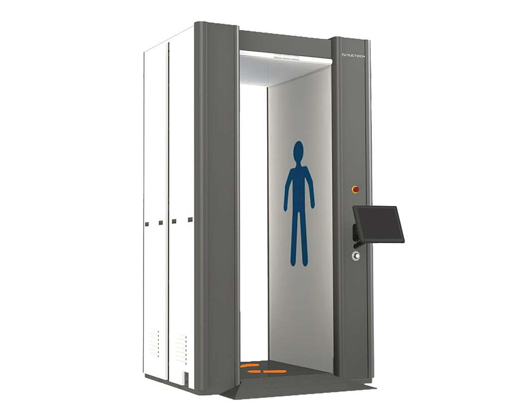
Once upon a time, the most high-tech security measure at an airport was the humble metal detector. Anyone who’s traveled in the last few decades has probably shuffled through one, hoping they didn’t forget about that rogue coin in their pocket. But as the world has changed, so too have the threats we face, and the tools we use to keep ourselves safe. Enter the era of body scanners, a real game-changer in security screening technology.
The journey from metal detectors to advanced body scanners wasn’t exactly a straight line. It involved a lot of innovation, trial and error, and yes, some public skepticism. Metal detectors were fine for spotting large metallic objects, but they missed a lot of other potential threats, like items that could be hidden in an xray suitcase. So, researchers and engineers started looking for ways to see more and see better, without causing too much inconvenience to travelers. That’s when X-ray and millimeter wave technologies came into play.
At first, people were understandably wary. After all, who wants to feel like they’re being X-rayed just to catch a flight? But as the technology improved and became less invasive, more and more people saw the benefits. Now, body scanners are a common sight at airports around the world, helping to keep us all a little bit safer.
How technology keeps evolving
It’s amazing how quickly technology evolves. One day, you’re marveling at the latest gadget, and the next day it’s old news. This rapid pace of change is especially true in the world of security screening. Take body scanners, for example. The early models were pretty basic compared to what we have now. They could detect objects hidden under clothing, but they had their limitations.
Today’s body scanners are light-years ahead of those early models. With advances in X-ray and millimeter wave technology, modern scanners can provide incredibly detailed images without compromising personal privacy. They can detect not only metallic objects but also non-metallic items like plastics or ceramics. And thanks to improvements in software and algorithms, these scans are faster and more accurate than ever before.
But it doesn’t stop there. Researchers are constantly working on new ways to make these systems even better. One exciting development is the use of artificial intelligence (AI) to analyze scan data in real-time. This not only speeds up the screening process but also reduces the risk of human error. In short, technology is making our world safer, one scan at a time.
Balancing security and privacy
One of the biggest challenges with any security technology is finding the right balance between safety and privacy. Nobody likes the idea of being scrutinized by a machine (or worse, another person) every time they go through a security checkpoint. And let’s face it, some of those early body scanner images were a bit too revealing for comfort.
Thankfully, modern body scanners have come a long way in addressing these concerns. Today’s machines use sophisticated algorithms to create generic outlines rather than detailed images of individuals. This means that security personnel can see potential threats without invading anyone’s privacy. It’s a win-win situation: enhanced security without compromising personal dignity.
Of course, there’s always room for improvement. Ongoing research aims to make these systems even more discreet while maintaining their effectiveness. It’s a delicate balancing act, but one that’s essential for maintaining public trust in these technologies.
The role of artificial intelligence in screening
Artificial intelligence is no longer just the stuff of sci-fi movies; it’s here, and it’s making a significant impact on our daily lives—including how we’re screened at security checkpoints. AI can analyze vast amounts of data in seconds, making it an invaluable tool in identifying potential threats quickly and accurately.
One of the key benefits of AI in security screening is its ability to learn and adapt over time. Traditional screening methods rely heavily on human judgment, which can be fallible. But AI systems can be trained on millions of images to recognize patterns and identify anomalies that might be missed by the human eye. This makes them incredibly effective at spotting even well-hidden threats.
Moreover, AI can help reduce false positives—those annoying instances when something harmless sets off an alarm. By refining its algorithms based on past data, an AI system can become increasingly accurate, ensuring that fewer innocent travelers are pulled aside for additional screening. It’s like having an extra layer of security that gets smarter with every scan.
See also: Benefits of Educational Technology
The future of public safety technology
So what does the future hold for public safety technology? If current trends are any indication, we’re heading towards even more advanced and efficient systems that will make our lives safer without adding unnecessary hassles.
Imagine walking through a security checkpoint without having to stop or even slow down. With advancements in sensor technology and AI, this could soon be a reality. Future systems might be able to scan large groups of people simultaneously while they’re moving through an area—no need for individual scans or long lines.
Another exciting possibility is the integration of biometric data into security screenings. Fingerprints, facial recognition, and even retinal scans could be used to verify identities quickly and accurately. Combined with AI-powered analysis, this could create a seamless security experience that’s both fast and highly reliable.
The ultimate goal is to create a world where security measures are virtually invisible yet incredibly effective—keeping us safe without disrupting our daily routines. It might sound like something out of a science fiction novel, but with the pace of technological innovation today, it might not be as far off as we think.